

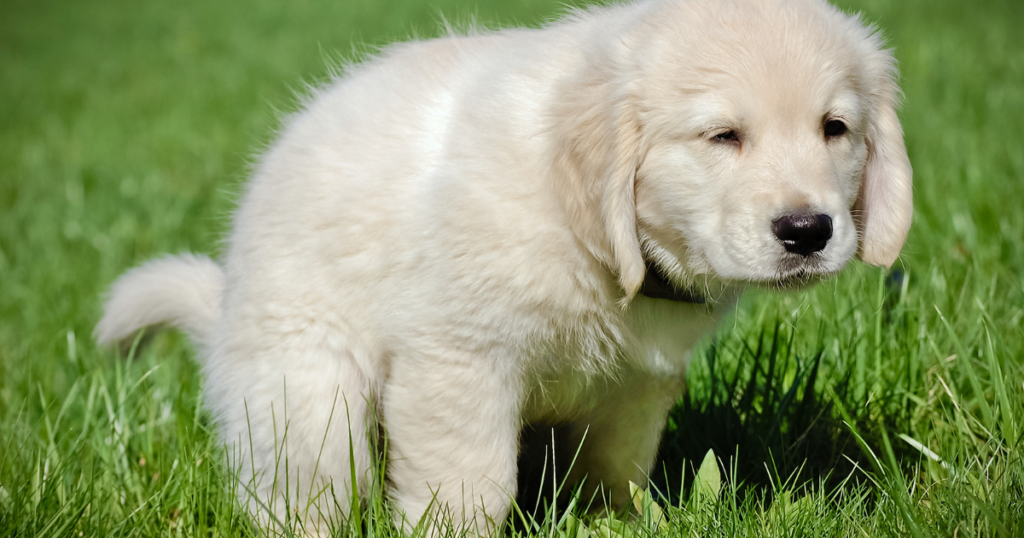
You bring your puppy home, you buy the bed, the toys, and the food, and then it happens. A puddle on the rug, five minutes after you cleaned the last one. You start to wonder if your puppy is being naughty, or if you are doing something wrong.
You are not. Your puppy is not being naughty either. Puppy potty training is not about teaching a puppy to be good. It is about teaching a small animal with a small bladder and no idea what a house is, where it is supposed to go. Once you understand that, the whole process becomes simpler, calmer, and much faster.
This guide gives you a clear puppy potty training schedule, a daily routine you can follow from tomorrow morning, and honest answers to the questions every new puppy owner asks. your puppy barks to tell you it needs to go out, our first guide explains why dogs bark and how to read those signals calmly.”
What Puppy Potty Training Really Means
Puppy potty training works through association and timing, not through lectures or punishment. Your puppy learns one simple idea: going outside brings praise and a treat, while going inside brings nothing interesting at all.
That is why timing matters more than talent. If you praise your puppy three seconds after it goes in the right spot, it connects the praise to the action. If you praise it two minutes later, after it has run back inside and started playing, it has no idea what you are praising.
Good puppy potty training is boring in the best way. Same spot, same cue word, same reward, same routine, many times a day. Puppies learn from repetition, and owners succeed through consistency.
A Puppy Potty Training Schedule by Age
A useful starting rule is that a puppy can usually hold its bladder for about its age in months plus one hour, up to about eight hours for an adult dog. An eight-week-old puppy may need to go every one to two hours. A four-month-old puppy may manage three to four hours during the day.
Here is a simple schedule to start with:
- 8 to 10 weeks old: outside every 1 to 2 hours, plus after waking, eating, playing, and before bed.
- 3 to 4 months old: outside every 2 to 3 hours, plus after waking, eating, playing, and before bed.
- 5 to 6 months old: outside every 3 to 4 hours, plus after waking, eating, playing, and before bed.
- 6 months and older: outside every 4 to 6 hours, with a regular morning, midday, evening, and bedtime routine.
Night time is different. Most puppies need at least one night break in the early weeks. That break usually becomes less frequent as the puppy grows, and many puppies sleep through the night between four and six months old. Do not expect a young puppy to hold it all night just because you are tired.
The Daily Routine That Makes Puppy Potty Training Work
A schedule only works if you know exactly what to do at each trip. Follow the same steps every time, and your puppy will start to predict what comes next.
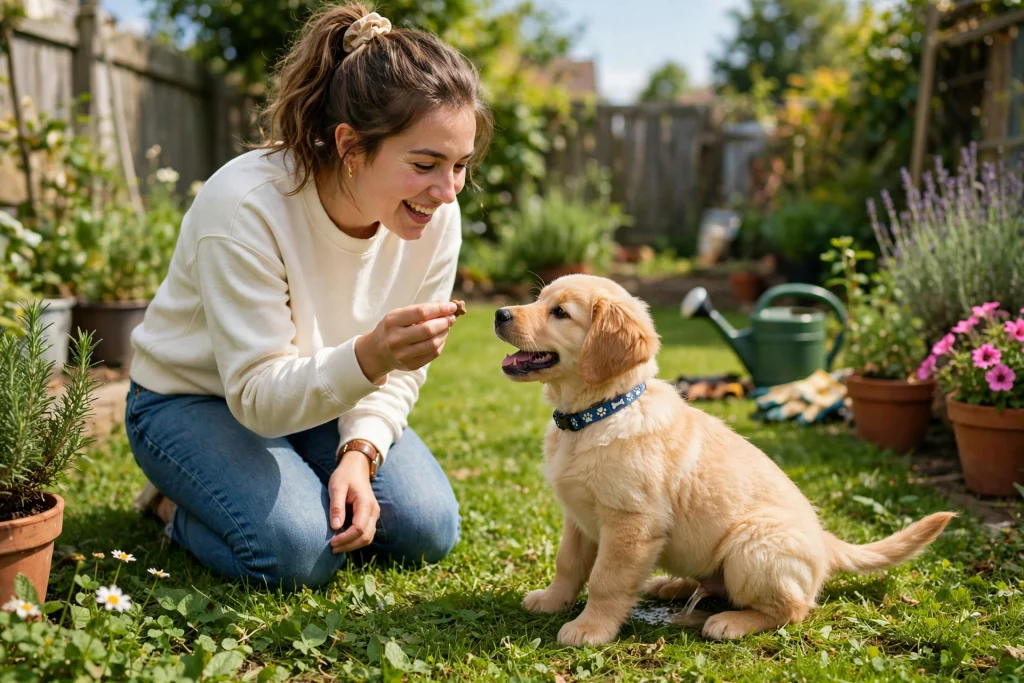
Take your puppy out first thing in the morning, before anything else. Go to the same spot, stand still, and use the same cue word, such as “go potty”. Give your puppy a few calm minutes. Do not turn the trip into playtime yet, or your puppy will forget why it went outside.
When your puppy goes, praise it calmly right away and give a small, tasty treat within a few seconds. Then allow a short play or walk as a bonus. This teaches your puppy that going outside first leads to fun, not that fun comes first and potty comes later.
Repeat this routine at the key moments of the day: right after waking up, including after naps, right after every meal, after drinking a large amount of water, after active play or excitement, and last thing before bed, even if your puppy went out an hour earlier.
Watch for signs that your puppy needs to go: sniffing the floor in circles, squatting, restlessness, whining, or suddenly leaving a play session. If you see a sign, go outside calmly and quickly. Do not shout or chase your puppy, because fear makes accidents more likely, not less.
How to Stop a Puppy From Peeing in the House
If you are asking how to stop a dog from peeing in the house, start with prevention, not correction. Most indoor accidents happen because the puppy had too much freedom, too long a gap between trips, or no one noticed the early signs.
First, tighten the schedule. Go out more often for a few days, especially after meals and play. Second, limit freedom. Keep your puppy in the same room as you, so you can see it at all times. Third, clean accidents properly. Use an enzymatic cleaner made for pet urine, because ordinary cleaners may leave a smell that humans cannot detect but dogs can. If a spot still smells like a toilet to your puppy, it will use it again.
If you catch your puppy in the middle of an accident, stay calm. Interrupt gently, take it outside to finish, and praise it if it finishes outside. If you find an accident after it happened, do not scold your puppy. It will not connect your anger to something it did ten minutes ago. It will only learn that you are unpredictable when there is a puddle on the floor.
Never rub your puppy’s nose in an accident, and never use physical punishment for potty mistakes. These methods do not teach a puppy where to go. They teach it to hide when it needs to go, which makes training harder and damages trust.
Crate Training and Night Time Tips
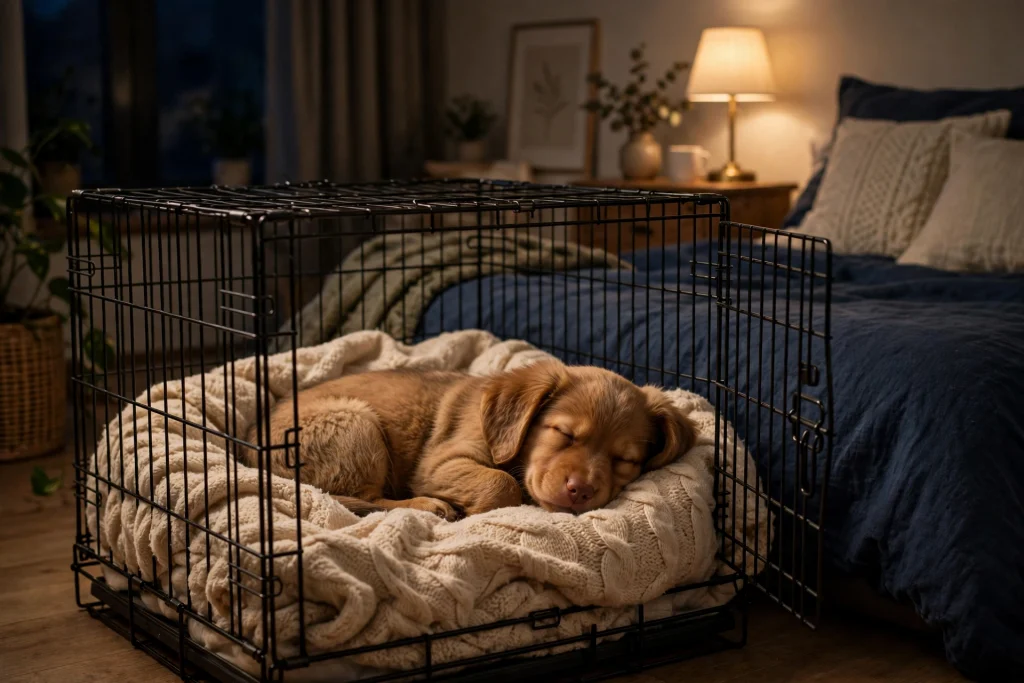
Puppy potty training with a crate can help a great deal, because most dogs prefer not to soil their sleeping area. A crate is not a punishment and it is not a cage for all-day storage. It is a small, safe den where your puppy can rest while you cannot supervise it.
Choose a crate that is just large enough for your puppy to stand up, turn around, and lie down comfortably. If the crate is too large, your puppy may use one corner as a toilet and sleep in the other. Many crates come with a divider so the space can grow with your puppy.
At night, keep the crate near your bed in the early weeks. Your puppy will feel safer, and you will hear it when it needs a night break. Keep night trips boring: no play, no bright lights, no long conversations. Take your puppy out, let it go, praise quietly, and return it to the crate.
Limit water about two hours before bed, but do not restrict water during the day. A puppy needs regular water to stay healthy, and dehydration is never a training method.
Pee Pads: When They Help and When They Slow Training Down
Learning puppy potty training with pads is useful in some homes and unhelpful in others. Pads can help if you live in a high-rise apartment, if your puppy has not finished its vaccinations and your vet has advised you to avoid public ground, or if you cannot get home every two hours in the early weeks.
If you use pads, place them in one consistent spot, away from food and bedding, and take your puppy to the pad on the same schedule you would use for outside trips. Praise and reward success on the pad just as you would outside.
The problem starts when pads become the permanent plan without a transition. A puppy that learns to go on a soft pad indoors may struggle to understand why the rug or a blanket is different. If your long-term goal is outdoor training, plan the transition early. Move the pad gradually closer to the door, then just outside the door, then to the outdoor spot, over several days.
How to Potty Train an Older Dog, and How Long It Takes
You may also need to know how to potty train an older dog, and the same method works. An older dog that was never fully house trained, a rescue dog adjusting to a new home, or a dog that has started having accidents after a change in routine can all learn with a clear schedule.
Start as if the dog were a puppy: frequent trips, close supervision, the same spot, and immediate praise. Do not assume an older dog “should know better”. It may never have been taught properly, or it may be anxious in a new environment. One difference is that you should rule out medical causes sooner with an older dog. If a previously house trained adult dog suddenly starts having frequent accidents, talk to your vet, not just tighten the schedule.
How long does puppy potty training take? There is no single answer, and anyone who promises a fixed number of days is oversimplifying. Many puppies start to understand the routine within a few weeks, and many are mostly reliable by four to six months old. Full reliability, including when excited, tired, or in a new place, can take longer.
When to Call a Vet
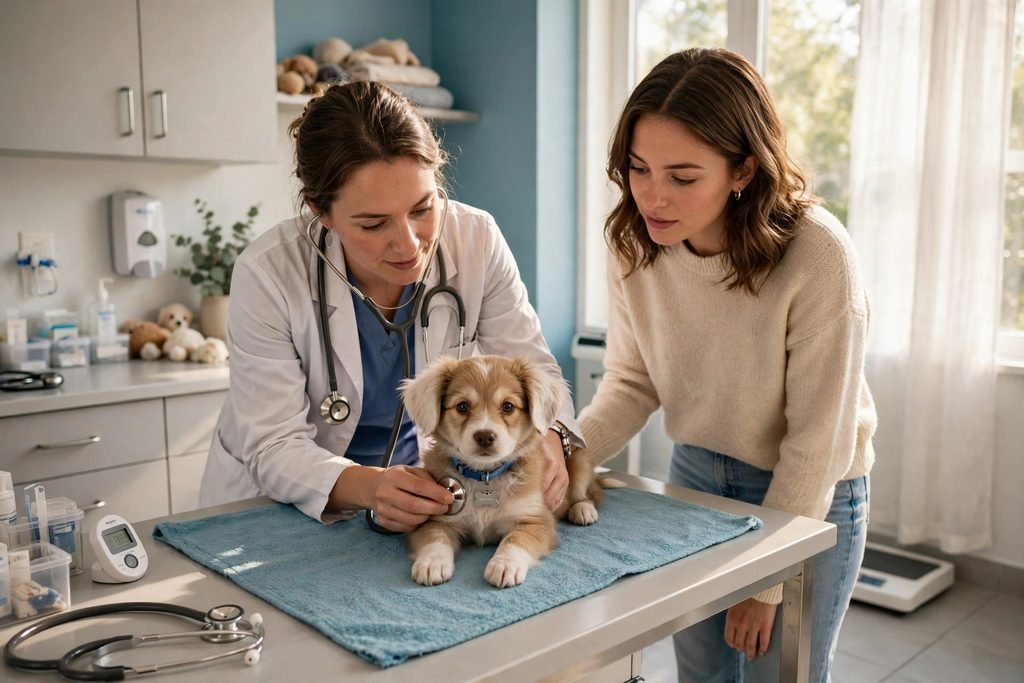
Most puppy potty training problems are training problems, but some are medical. Contact your vet if your puppy is urinating very frequently in tiny amounts, straining or crying while urinating, passing blood in urine, drinking far more water than usual, or suddenly losing a skill it had already learned. These signs can point to a urinary infection or another health issue, and early treatment helps both your puppy and your training.
The American Kennel Club also stresses consistency, supervision, and positive reinforcement in its puppy potty training guide.
Conclusion: Start With Tomorrow Morning
Puppy potty training does not require a perfect house, a perfect schedule, or a perfect puppy. It requires a simple routine, repeated often, with patience when accidents happen and praise when things go right.
Start tomorrow morning. Take your puppy out first thing, use the same spot and the same cue word, reward success right away, and keep the gaps between trips short. Keep a note of accidents for a few days, and you will quickly see the pattern: the times, the triggers, and the moments when supervision slipped.
If your puppy also barks to tell you it needs to go out, or barks when it is excited or frustrated during training, our first TrainPaw guide explains why dogs bark and how to respond calmly, which can help you read those signals more clearly.
Try the schedule for seven days and notice the change. Small, consistent steps are what turn a confused puppy into a confident, house trained dog.
How often should I take my puppy out to potty?
In the early weeks, every one to two hours during the day, plus after waking, eating, drinking, playing, and before bed. As your puppy grows, you can stretch the gaps gradually, using its age as a rough guide.
How long does it take to potty train a puppy?
Many puppies understand the routine within a few weeks and become mostly reliable by four to six months old. Full reliability in exciting or new situations can take longer, and setbacks are normal.
Should I use pee pads for puppy potty training?
Pee pads can help in apartments, during the vaccination period, or when you cannot get home often. If outdoor training is your long-term goal, plan a gradual move from the pad to the door and then outside, so your puppy does not learn that indoors is the permanent toilet.
What should I do when my puppy has an accident in the house?
Stay calm, clean the spot with an enzymatic cleaner, and tighten the schedule. If you catch your puppy mid-accident, take it outside calmly. Do not punish it after the fact, because it will not connect the punishment to the accident.